How to Trade on a Betting Exchange: In-Play Trading Strategy for Guaranteed Profits
Table of Contents
- Introduction(In-Play Trading Strategy)
- What Is a Betting Exchange?
- How Does a Betting Exchange Work? (A Step-by-Step Example)
- Back and Lay Betting Explained
• What Is a ‘Back’ Bet?
• What Is a ‘Lay’ Bet? - Betting Exchange vs. Traditional Bookmaker (Comparison)
• So, Is a Betting Exchange Better Than a Bookmaker? - A Real In-Play Trading Strategy: The ‘Green Book’
• The Trading Mindset vs. The Bettor Mindset
• Step-by-Step In-Play Trading Example (Football) - Benefits (Pros) of Using a Betting Exchange
- Risks (Cons) of Your In-Play Trading Strategy
• The Single Biggest Risk: Understanding ‘Liability’
• What Is Liquidity on a Betting Exchange? - Conclusion: Are You a Bettor or a Trader?
- Frequently Asked Questions (FAQ)
Introduction
In-Play Trading Strategy. Tired of betting against “the house” and their hidden margins? The good news is, there’s a smarter, more dynamic way to bet — in-play trading on a betting exchange.
Unlike traditional bookmakers, betting exchanges are peer-to-peer (P2P) platforms. Here, you’re not playing against the bookmaker. Instead, you’re betting directly against other users — just like traders do in the stock market.
This revolutionary approach transforms you from a passive bettor into an active sports trader. Ready to stop gambling on fixed outcomes and start trading live price movements? Let’s dive in.
What Is a Betting Exchange?
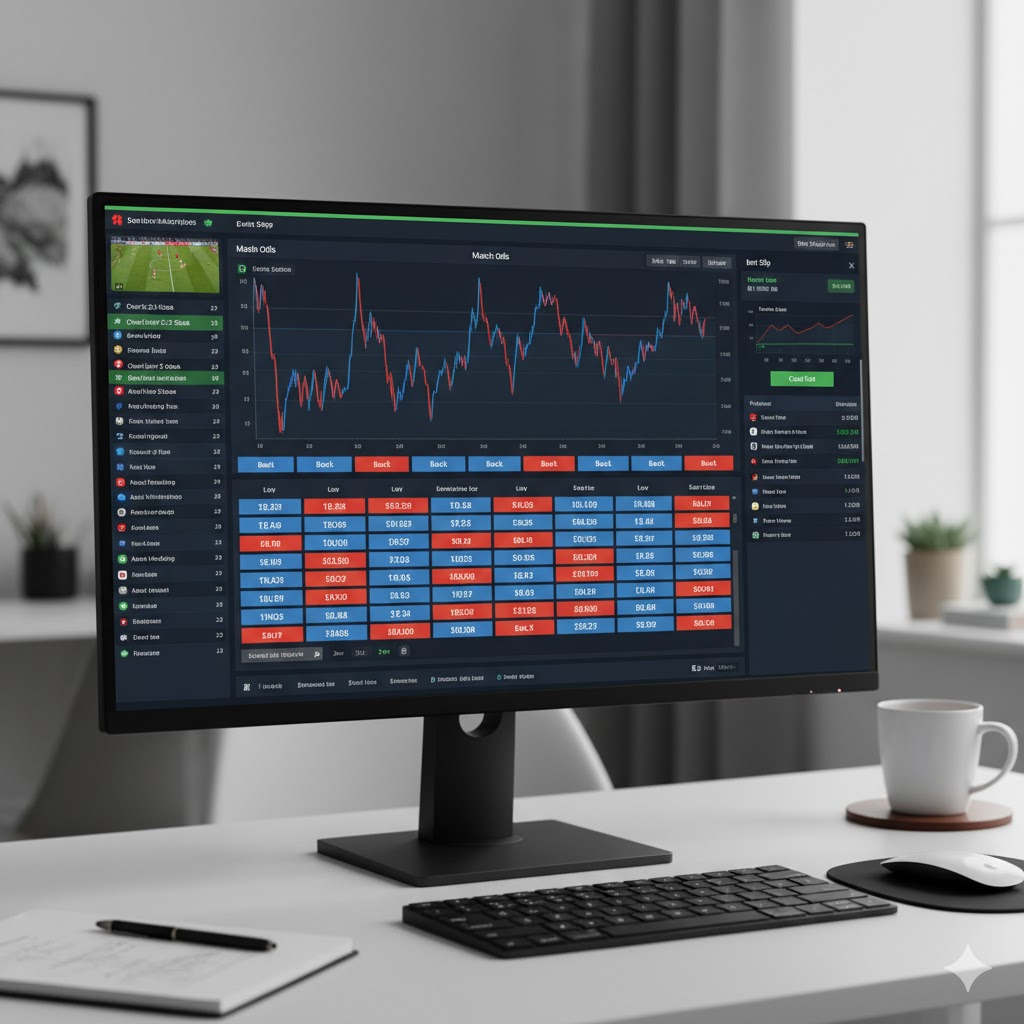
Think of a betting exchange as the stock market of sports.
On a stock exchange, you buy and sell shares with other investors — not the exchange itself. Similarly, on a betting exchange (like Betfair, Smarkets, or Matchbook), you bet against other users who hold the opposite view.
If you believe Team A will win, you back them.
If someone else believes they won’t, they lay your bet.
The exchange safely holds both stakes and pays the winner after deducting a small commission (typically 2–5% of net winnings). Unlike a bookmaker, the exchange doesn’t profit from your losses — it only earns from successful trades.
This P2P model is what makes in-play trading strategies possible.
A Complete Guide to Back and Lay Betting
How Does a Betting Exchange Work? (A Step-by-Step Example)
Let’s use an example: Manchester United vs. Liverpool.
- You Back Manchester United to Win: You bet $10 at odds of 3.0.
- Your Bet Waits for a Match: The market looks for someone willing to take the other side.
- A Layer Accepts It: Another user believes Man Utd won’t win and “lays” your bet.
- The Exchange Matches Both Bets: It now holds your $10 and the layer’s $20 liability.
- Outcome:
- If Man Utd wins: You win $20 profit (minus 5% commission = $19 net).
- If Man Utd loses/draws: The layer wins your $10 stake.
In short, you’re betting against another person, not the house.
Back and Lay Betting Explained
These are the two fundamental functions on any betting exchange.
What Is a ‘Back’ Bet?
A back bet means you’re betting on something to happen.
For instance, you might back a team to win or back “Over 2.5 Goals.” If your prediction is correct, you profit — just like with a bookmaker.
What Is a ‘Lay’ Bet?
A lay bet means you’re betting on something not to happen. You essentially become the bookmaker.
For example:
- Lay a horse to win → you profit if any other horse wins.
- Lay a team to win → you profit if they lose or draw.
- Lay “Over 2.5 Goals” → you profit if the match ends with 0–2 goals.
When you lay a bet, your potential loss (liability) depends on the odds. We’ll break that down later.
5 Simple Football Trading Strategies for Beginners
Betting Exchange vs. Traditional Bookmaker (Comparison)
| Feature | Traditional Bookmaker | Betting Exchange |
|---|---|---|
| Opponent | The Bookmaker | Other Users (P2P) |
| Profit Source | Built-in Margin | Commission on Winnings |
| Odds | Lower, fixed by bookmaker | Higher, driven by market demand |
| Bet Types | Only Back Bets | Back and Lay Bets |
| In-Play Trading | Limited (Cash-Out only) | Core feature |
| Winning Accounts | Can be restricted or banned | Always welcome |
So, Is a Betting Exchange Better Than a Bookmaker?
For serious bettors and traders — absolutely. You get better odds, more control, and no limits for winning.
However, casual punters who just want quick bets may find bookmakers simpler.
Visit the Responsible Gambling Council for guides on betting safely
A Real In-Play Trading Strategy: The ‘Green Book’. In-Play Trading Strategy
This is where it all comes together — your first live trading strategy.
The Trading Mindset vs. The Bettor Mindset
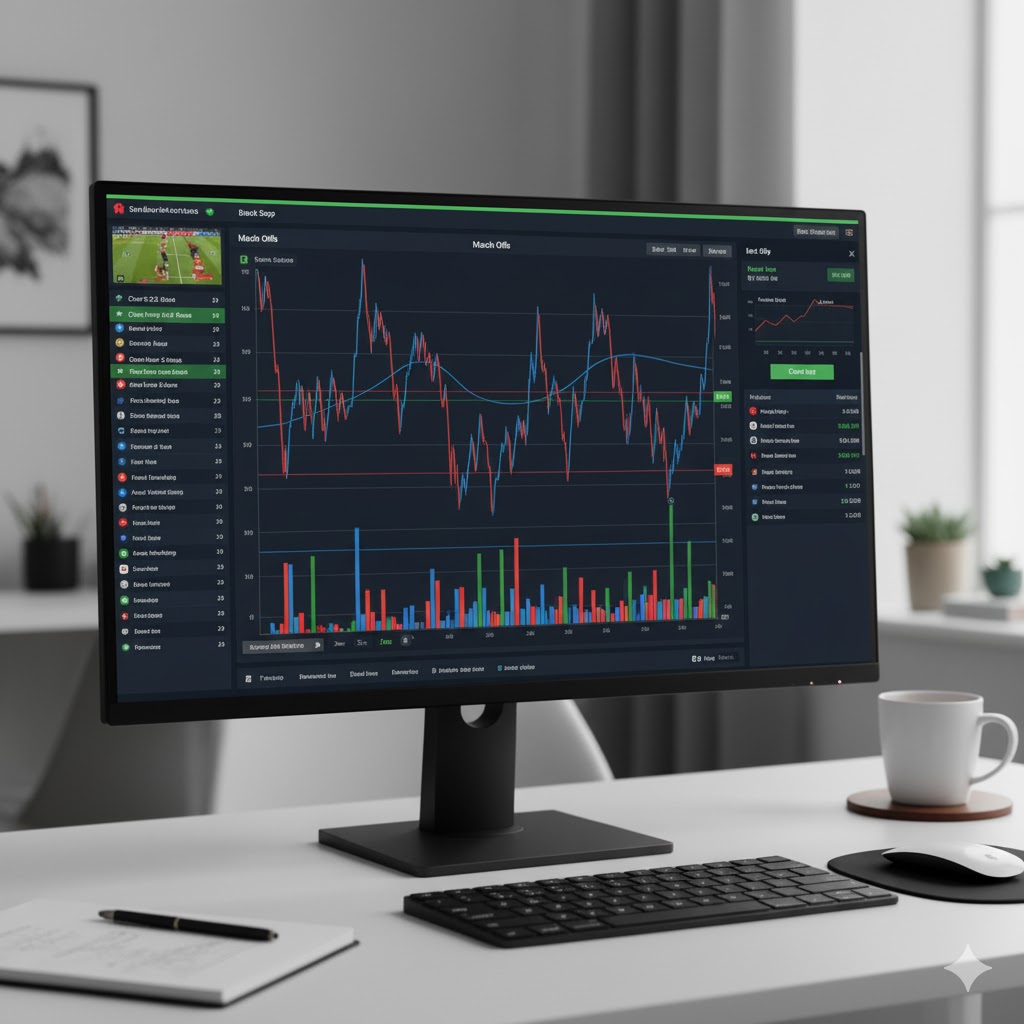
A bettor hopes to be right after 90 minutes. A trader profits from price movement, regardless of the final result.
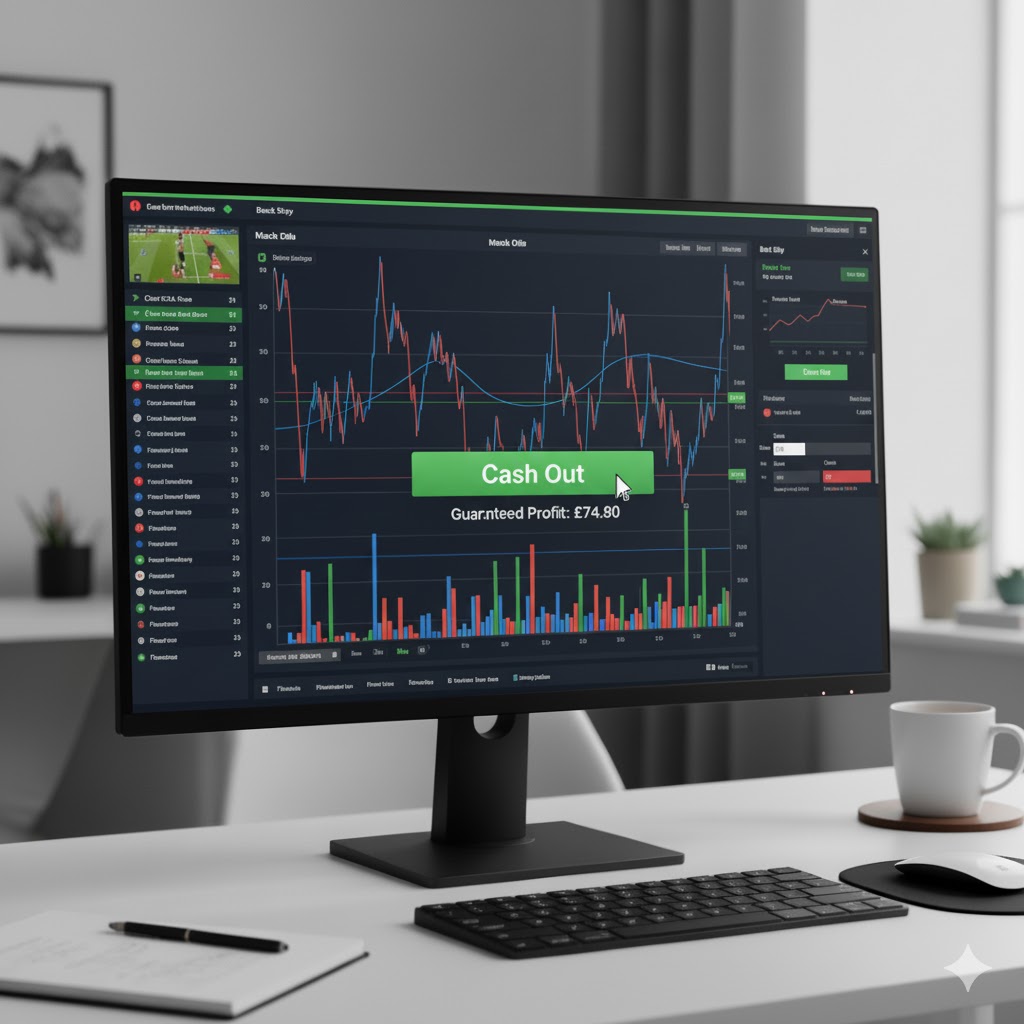
By using both back and lay bets smartly, you can lock in a guaranteed profit before the event even ends — known as “greening up” or creating a Green Book.
Step-by-Step In-Play Trading Example (Football)
Let’s revisit Man Utd vs. Liverpool.
Goal: Profit from a goal — regardless of who scores.
- Pre-Match:
Back “Over 2.5 Goals” at odds of 2.0 with a $100 stake. - During Play:
At the 15th minute, Liverpool scores. The odds for “Over 2.5 Goals” drop to 1.50. - Trade:
Lay “Over 2.5 Goals” at 1.50 for $133.33.
Now you’ve created a Green Book:
- If the match ends 3+ goals → +$33.33 profit.
- If it ends 0–2 goals → +$33.33 profit.
Guaranteed winnings, regardless of the result.
A Full Guide to Betting Exchange Liability
Benefits (Pros) of Using a Betting Exchange. In-Play Trading Strategy
✅ Better Odds: Usually 5–20% higher than bookmakers.
✅ Lay Betting Power: Bet against outcomes, like a bookmaker.
✅ In-Play Trading: Lock in profits or cut losses mid-event.
✅ Transparency: View live market depth and liquidity.
✅ No Bans for Winners: Exchanges welcome profitable traders.
Risks (Cons) of In-Play Trading. In-Play Trading Strategy
Trading is exciting but risky without proper understanding. Most losses occur from poor liability management or low liquidity markets.
Read about UK Gambling Commission rules for P2P betting
The Single Biggest Risk: Understanding ‘Liability’. In-Play Trading Strategy
Liability is how much you could lose on a lay bet.
- If you back a bet → max loss = your stake.
- If you lay a bet → max loss = depends on the odds.
Example:
You lay a 100/1 horse for $10.
If it loses → you win $10.
If it wins → you owe $1,000.
That’s why controlling your liability is crucial to long-term survival.
What Is Liquidity on a Betting Exchange? In-Play Trading Strategy
Liquidity means the amount of money available to match bets.
Low liquidity = your bet might not be matched instantly.
High liquidity = faster, more reliable trades.
For consistent results, focus on high-liquidity events like Premier League matches or major horse races.
Conclusion: Are You a Bettor or a Trader?
A betting exchange offers unmatched flexibility. You can stop guessing outcomes and start trading odds — just like financial markets.
Success here isn’t about luck; it’s about discipline, timing, and smart risk management. Master these principles, and you’ll gain an edge that traditional bookmakers can never provide.
Frequently Asked Questions (FAQ). In-Play Trading Strategy
1. What’s the easiest in-play trading strategy?
Start with “scalping” — backing a selection and laying it for a slightly lower price to earn small, consistent profits.
2. Do I pay commission on losing bets?
No. Commissions apply only to net winnings in a market.
3. Can betting exchanges ban winning players?
No. They encourage winners because more winnings mean more commission for them.
4. What does “greening up” mean?
Placing opposing bets to guarantee profit regardless of outcome — as shown in the Green Book example.
5. What if my in-play bet isn’t matched?
It stays as unmatched (inactive). Cancel it or adjust your odds to get it matched faster.